Fact-Checked
On Wednesday afternoon, November 11, 2026, a three-story building at the corner of Flatbush and Bedford Avenues in Brooklyn collapsed into the construction site next door, where excavation was underway. Officials have reported at least two deaths and more than a dozen people hurt, including construction workers and residents, and the search of the rubble is continuing. An unimaginable tragedy. Our thoughts are with everyone affected and with the FDNY and emergency crews still working the site.
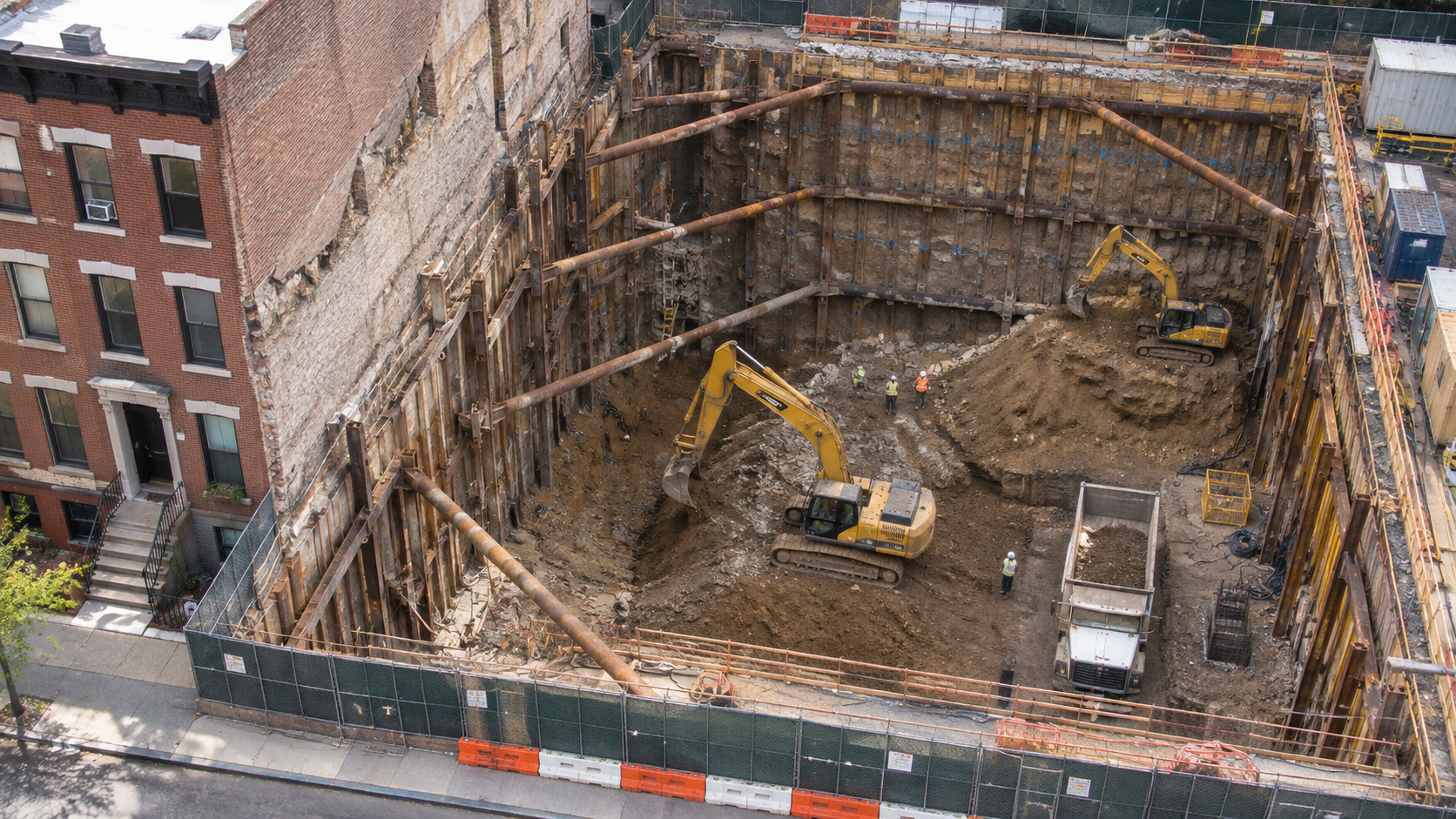
The cause has not been determined, and the Department of Buildings is investigating. We will not guess at what happened here and will leave that to the DOB, OSHA and the other investigators. But this kind of collapse raises a legal question New Yorkers rarely think about until it is too late: what does the law require of a developer who digs next to an occupied building?
It is a sight we regularly see: what was once a row of two- and three-story buildings now includes one that has been demolished, and in its place is coming a high-rise apartment or office building. What does the law require of a developer?
These details come from early news reports and may change as the investigation moves forward.
New York City is a city of shared walls and buildings set right on the lot line. 'Lot line' walls and windows are synonymous with New York City, and because of that, the NYC Building Code puts a clear duty on whoever causes excavation or foundation work. Under Building Code section 3309.4, regardless of how deep the work goes, the person who causes it must, at all times during the work and at their own expense, preserve and protect adjoining structures from damage. The rule assumes the neighbor allows access to inspect and protect the property; if access, however, is refused, the code shifts that duty to the neighbor. Related provisions require the excavator to underpin or otherwise support the neighboring building when needed, and they address party walls.
In practice, protecting the building next door is an engineering job. Depending on the project, it can involve a pre-construction survey of the neighboring building, an approved support of excavation plan, underpinning or shoring of the neighbor's foundation, and monitoring for movement, vibration and cracking while the work goes on. When the soil supporting an old masonry building is removed without proper support, the result can be exactly what nobody wants: a wall that loses its footing.
This duty is not one a developer can simply hand off. New York's highest court has held that the predecessor to this rule makes an excavator absolutely liable for damage to a neighboring building, no matter how careful the excavator was, and the First Department has since described the current Building Code section as a strict liability provision. Those cases involved damage to neighboring buildings. How the rule applies to an injury or death claim depends on the facts and the claim, which is one reason these cases need careful legal analysis.
Construction projects in New York involve layers of companies, and responsibility can fall on more than one of them. Depending on the facts, that can include:
Identifying every responsible party matters because each usually carries its own insurance. In a catastrophic case, one policy is often not enough to cover the full harm.
Residents, customers, visitors and passersby who are hurt by a collapse can bring a negligence claim against the parties whose conduct caused it. Building Code violations, stop work orders, permit history and inspection records can all become key evidence. Tenants who lost their homes and belongings may also have claims for property loss and related costs.
Construction workers hurt on a New York job site have rights on two tracks. Workers' compensation covers medical care and part of lost wages regardless of fault, but in most cases it bars a lawsuit against your own employer. Separately, New York's Labor Law allows injured workers to sue property owners and general contractors. Labor Law section 241(6) applies to construction, excavation and demolition work and is tied to specific safety rules in the State Industrial Code, including a set of rules that deal directly with excavation, such as shoring and protection against cave-ins. One of those rules speaks directly to this situation: when excavation is done near buildings, their stability must be maintained with underpinning, sheet piling, bracing or an equivalent means, and those measures must be inspected at least daily by an experienced, designated person. Labor Law section 200 covers unsafe work sites more generally.
Your immigration status does not prevent you from bringing an injury claim in New York.
When someone is killed, New York law allows a wrongful death claim, brought through the person's estate, for the losses suffered by the family, along with a claim for the pain and suffering the person endured before death. These claims require an estate representative to be appointed, and strict deadlines apply. A wrongful death action must generally be started within two years of the death, and where a city or other public agency is involved, a written notice of claim is due within 90 days (in a death case, running from the appointment of the estate representative).
After a collapse, the site is often demolished or cleared for safety reasons, and the physical evidence goes with it. Excavation logs, monitoring data, engineering plans and communications between contractors can be critical. A lawyer can take steps to demand that this evidence be preserved and to retain independent engineers before the scene is gone. Deadlines can also be short, especially where a public agency is involved.
If you have been affected by a building collapse or construction accident anywhere in New York, get medical care first, keep copies of every medical and repair record, take photographs if it is safe to do so, and be careful about giving recorded statements to an insurance company before you understand your rights.
Darren T. Moore is the founder of MooreJustice Accident & Injury Lawyers in New York City. He tries construction accident, commercial trucking and medical malpractice cases to verdict across New York. Darren spent his summers working in construction, and he brings that job-site knowledge to every construction case, from the trades and the equipment to the walkways and elevated work.
This article is general information about New York law and is not legal advice. Attorney Advertising. Prior results do not guarantee a similar outcome.
Sources: ABC7 New York, CBS New York, News 12 Brooklyn, WHDH/Associated Press (Nov. 11, 2026); NYC Building Code sections 3309.4 and 3309.5 (NYC Admin. Code, American Legal Publishing); Yenem Corp. v. 281 Broadway Holdings, 18 N.Y.3d 481 (2012); 1992 Third Realty LLC v. Third Ave N.Y. Realty LLC, 2026 N.Y. Slip Op. 03871 (1st Dep't 2026); 12 NYCRR 23-4.1(a); Labor Law section 241(6); EPTL 5-4.1; General Municipal Law section 50-e.
Business Name: MooreJustice New York City Accident & Injury Lawyers
Business Address: 171 Madison Avenue, Suite 305, New York, NY, USA
Business Phone Number: +1 (917) 809-7014

Darren Moore is the founder of The Law Offices of Darren T. Moore, P.C. and a dedicated New York personal injury attorney. Known for his relentless advocacy and client-focused approach, he has spent his career helping injury victims pursue justice and recover the compensation they deserve. Darren handles a wide range of personal injury matters and is committed to delivering personalized representation for every client.


schedule a free consultation
"*" indicates required fields