Fact-Checked

Construction is one of the most dangerous ways to earn a living, and New York gives injured construction workers some of the strongest legal protections in the country, and rightly so. The men and women who risk life and limb to build New York's office towers, skyscrapers and apartment buildings deserve that protection. Those protections generally live in three sections of the Labor Law: Sections 200, 240(1) and 241(6).
Every injury lawyer wants construction cases. Why? The injuries are usually serious, and the economic impact on a worker who cannot return to work is huge. Depending on the worker's age, the injury and whether they are union or non-union, the loss of wages, annuity, pension and future earnings can be enormous. But here is the problem: not every construction case is a fall from a defective ladder or a collapsed scaffold. Those cases are like a rear-end car accident, and almost any lawyer can handle them. Many construction accidents involve unsafe equipment, unsafe site conditions, inexperience and chaos. Most lawyers who take on these cases have never set foot on a working construction site, let alone know what a pneumatic drill does or what a carpenter actually does all day. Site experience is not a requirement, but if no one on your side understands how the job site really operates, you and your lawyer may be starting from behind.
I come at this differently. I was not born into a legal family; I was born into a construction family. My dad is an electrician, and my uncles are plasterers, block layers and carpenters. My first summer job was mixing skim coat for a plasterer. My second was running cables across a suspended ceiling in an apartment complex. I spent my summers working construction, so I know what actually happens on a job site: how the trades interact, how the equipment is supposed to work, and how people really get hurt, whether in the common areas, the passageways, the work areas or up at a height. I also appreciate that a construction site sometimes runs on its own rules. There is one way, and then there is the foreman's way. The same is true of the law: there is the law of the site, and there is the law that truly applies on site. Knowing the difference is often what separates a case that gets dismissed from a case that gets full value.
This drums up a lot of debate among people who are not familiar with the law. Under the Labor Law, the owner and the general contractor are responsible for conditions on the job site. Depending on what happened, they can be held absolutely liable, one hundred percent responsible, even if they were not on site when the accident happened, and sometimes even if they never visited the site at all. That is especially true of the owner.
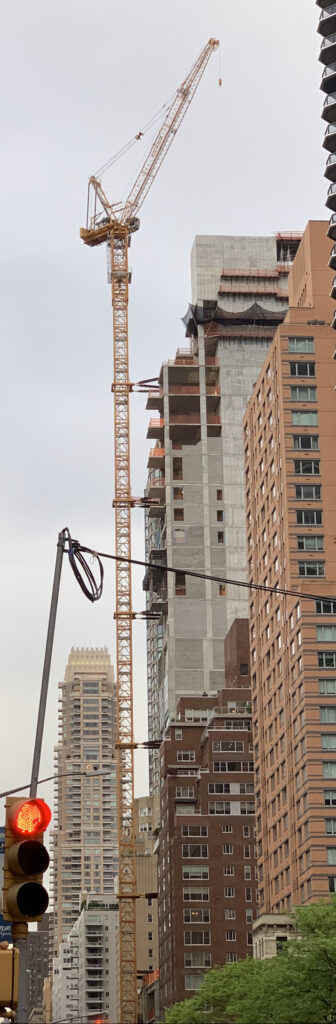
Why? My reading is that the Legislature wanted the buck to stop at the top. We all know the rule that you generally cannot sue your own employer; you receive workers' compensation instead. So imagine an owner or general contractor hires the lowest bidder, a cowboy contractor who puts workers on defective, inadequate or wrong equipment for the task, and a worker is seriously injured. That worker would have no recourse beyond workers' compensation against the employer, and the owner and general contractor could simply turn a blind eye to how the work gets done. That is not how it works. The Legislature placed responsibility for job-site safety on the people who ultimately benefit from the finished product: the owners, the developers and the general contractors. That does not give the subcontractors a pass. It just brings more accountability to the process.
Now that we have established who the responsible parties generally are, which sections apply?
Labor Law 200 is the codification of the common-law duty of an owner or general contractor to provide workers with a safe place to work. As the Appellate Division, Second Department explained in Ortega v. Puccia, Labor Law 200 cases fall into two distinct categories:
Because Section 200 is the common-law duty in statutory form, comparative negligence applies. And for dangerous-condition claims, unlike Sections 240 and 241, Section 200 has no homeowners' exemption for one- and two-family homes. It is also the broadest of the three sections, because it is not limited to construction and can reach almost any workplace.
Labor Law 240(1), often called the Scaffold Law, deals with elevation-related, gravity-related accidents. It covers workers falling from a height, and objects falling from a height that should have been secured. In Runner v. New York Stock Exchange, the Court of Appeals set the modern test: "the single decisive question is whether plaintiff's injuries were the direct consequence of a failure to provide adequate protection against a risk arising from a physically significant elevation differential." That is true whether or not anyone actually fell.
When a violation of 240(1) is established, the owner and general contractor face absolute liability, and the worker's own carelessness is not a defense. As the Court of Appeals explained in Blake v. Neighborhood Housing Services, the defense's way out is to show that the worker's own conduct was the sole cause of the accident, and if a statutory violation is a cause of the injury, the worker cannot be solely to blame. That is why a missing or defective safety device is so important. Because of this strict liability, and because falls from a height so often cause devastating injuries, 240(1) is the statute behind many of the largest construction injury recoveries in New York.
Labor Law 241(6) applies to construction, excavation and demolition work, and it carries a strict requirement that trips up lawyers who do not know this area: you must point to a concrete, specific violation of a provision of the New York Industrial Code (the Part 23 regulations), not a general notion of carelessness. The controlling cases, Ross v. Curtis-Palmer Hydro-Electric Co. and Misicki v. Caradonna, draw a hard line between specific, positive commands in the Code, which support a claim, and general safety language, which does not.
These cases can involve sharp projections on the site, debris, slipping and tripping hazards, defective equipment, inadequate lighting, demolition operations, and ladders that were not secured or held, depending on the height of the work. A case our office tried to verdict last year turned on one specific subsection of the Industrial Code, 23-1.5(c)(3), which requires equipment in use to be kept sound and operable. That is exactly the kind of specific Code violation a lawyer without job-site knowledge can walk right past.
241(6) also carries a powerful advantage. Unlike a common-law or Labor Law 200 claim for a site condition, you generally do not have to prove that the owner or general contractor had notice of the hazard. In Rizzuto v. L.A. Wenger Contracting Co., the Court of Appeals held that the duty under 241(6) is nondelegable, so the owner and general contractor can be liable even without notice of the hazard or control over the work. Take snow and ice: where the Industrial Code requires passageways and work areas to be kept free of ice, snow and debris, the violation itself can drive liability. Comparative negligence does apply under 241(6), so the worker's own conduct can reduce the recovery, which makes it all the more important to have a lawyer who knows the controlling cases.
Getting the activity right can decide the whole case. Section 240(1) covers the erection, demolition, repairing, altering, painting, cleaning or pointing of a building or structure, but routine maintenance does not qualify. Section 241(6) is narrower, reaching only construction, demolition and excavation. Section 200 is broader than both.
A decision from the Second Department this month, Neil v. Areeba, Inc. (October 14, 2026), shows why this matters. A building porter was struck by loose sheets of unsecured plywood. The court allowed him to pursue a Labor Law 200 claim, because Section 200 is not confined to construction sites. But it would not let him add a 240(1) claim, because his work as a porter was not one of the covered activities. Same accident, same plywood, two very different answers, depending on which statute applies and what the worker was actually doing.
We have secured significant results for injured construction workers under New York's Labor Law, including:
These results reflect what is possible when a lawyer understands both the statute and the site. See more of our results.
If you or someone you love was hurt on a construction site, or on any job, do not assume your case is simple, and do not assume it is hopeless. These three statutes overlap and diverge in ways that decide cases, and you need an attorney who can sort through both the law and the realities of the work. Call MooreJustice Accident & Injury Lawyers for a free, confidential consultation, or learn more about our construction accident practice.
Attorney Advertising. This article is for general informational purposes only and does not constitute legal advice, nor does it create an attorney-client relationship. Every case is different, and prior results do not guarantee a similar outcome. For advice about your specific situation, consult a licensed New York attorney.
*The $6.5 million result was obtained by attorney Darren T. Moore on a case he originated and personally worked while at a prior firm.
Business Name: MooreJustice New York City Accident & Injury Lawyers
Business Address: 171 Madison Avenue, Suite 305, New York, NY, USA
Business Phone Number: +1 (917) 809-7014

Darren Moore is the founder of The Law Offices of Darren T. Moore, P.C. and a dedicated New York personal injury attorney. Known for his relentless advocacy and client-focused approach, he has spent his career helping injury victims pursue justice and recover the compensation they deserve. Darren handles a wide range of personal injury matters and is committed to delivering personalized representation for every client.


schedule a free consultation
"*" indicates required fields