Fact-Checked
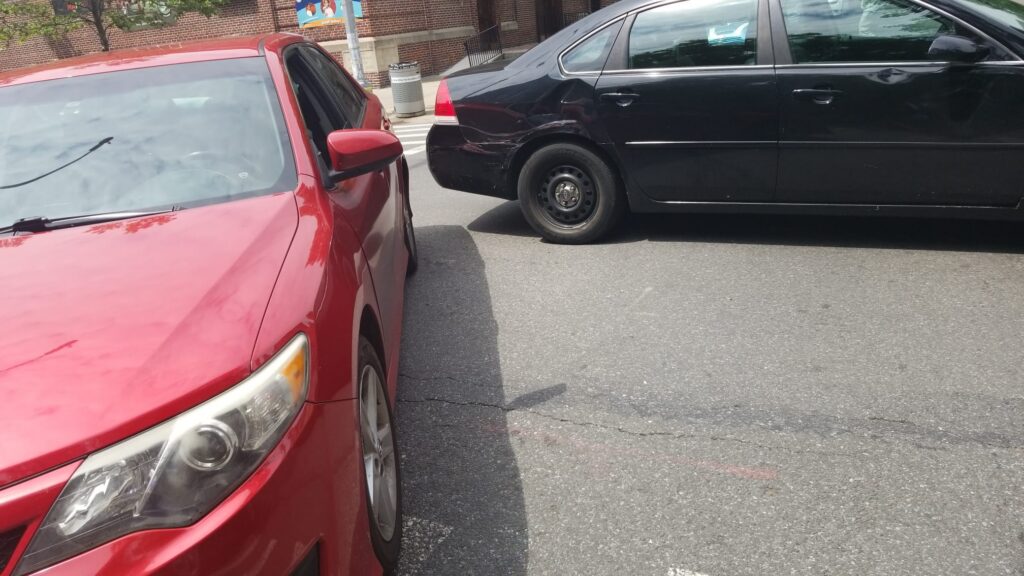
One of the most common things we hear from insurance adjusters is that "there is no property damage." We also hear from injured people who spoke to the insurance company before calling us, and were told that someone looked at a photo of a lightly dented bumper and decided, on the spot, that nobody could have been hurt. It is a favorite defense tactic: show a picture of a car with little visible damage and suggest the crash was too minor to cause a real injury. But the damage to a car and the damage to a human body are two very different things, and New York law does not let the defense turn a dented bumper into a verdict on your injuries.
We have represented many people who were genuinely hurt in collisions that did not leave dramatic vehicle damage. We have also seen crashes where the vehicles were wrecked and the people involved walked away without a scratch. In one case I tried, there was a police officer on the jury panel, and our conversation during jury selection went something like this:
Q: Officer, have you responded to the scene of many crashes?
A: Thousands.Q: Seen all types of crashes?
A: More than you can imagine.Q: Dare I say you've seen crashes where the people involved suffered serious injuries?
A: Yes.Q: Have you also seen crashes where the vehicles were totaled and people walked away unscathed?
A: Yes.Q: How about crashes with little to no damage, but people were injured?
A: Yes.Q: Does the extent of the property damage always match up with the injuries to the people involved?
A: No.Q: Based on your experience, why is that?
A: Cars are made of metal. Humans are muscle and blood. The damage to a vehicle is different from the damage to a body.
Whether an impact injured you depends on your body, your position and the forces involved, not on how the sheet metal held up. Every case is different and turns on its own facts, but the law gives you real protection against the lowball "your car looks fine" argument.
Modern bumpers are built to absorb and hide impact, so a car can look nearly untouched while real force still passes through to the people inside. Soft-tissue injuries, disc injuries and joint injuries can and do happen at lower speeds, especially when you are turned, braced or caught by surprise. A photograph of a bumper simply cannot tell you what happened to someone's spine or shoulder.
The defense cannot simply wave crash photos at the jury and argue the impact was "too minor" to hurt you. To make that argument with any force, they generally need a qualified expert, such as a biomechanical engineer or accident reconstructionist, who has been properly disclosed in advance and whose opinion is built on the actual facts of your case rather than guesswork.
That foundation matters. In Imran v. R. Barany Monuments, Inc. (2018), the Appellate Division, Second Department upheld an order throwing out a defense verdict and granting the injured plaintiff a new trial, because the defense biomechanical engineer's opinion lacked a proper foundation. He had not calculated the forces from all of the vehicles involved, he relied on a crash test that differed in significant ways from the real accident, and his test dummies did not match the plaintiff's weight. Courts have also questioned whether a biomechanical engineer, who is not a physician, can testify about what caused a specific person's medical injury at all.
Courts have also limited how the defense can use vehicle-damage photographs. A defense lawyer should not stand up in summation and tell the jury that minor-looking photos prove minor injuries when there is no expert foundation and nothing in the record to support it. Arguments to a jury have to rest on the evidence, not on a snapshot and a suggestion.
The same goes for the insurance company's medical examiner. A defense "independent" medical examination doctor is held to what was actually disclosed in their report. They cannot ambush you at trial with a brand-new theory, for example that your injuries are really from aging or degeneration, if that opinion was never properly exchanged beforehand.
Do not let an adjuster talk you out of a legitimate claim just because your car drove away. If you are hurting after a crash, get examined, tell your doctors about every symptom and keep following up, because your medical records are what tell the real story. And before you accept that your case is "too minor," talk to a lawyer who knows how to hold the defense to its burden.
If you were injured in a crash and are being told your case does not count because the damage looks small, but you feel different physically, call MooreJustice Accident & Injury Lawyers for a free, confidential consultation. We will look at what actually happened to you, not just to your bumper. Learn more about our car accident practice.
Attorney Advertising. This article is for general informational purposes only and does not constitute legal advice, nor does it create an attorney-client relationship. Every case is different, and prior results do not guarantee a similar outcome. For advice about your specific situation, consult a licensed New York attorney.
Business Name: MooreJustice New York City Accident & Injury Lawyers
Business Address: 171 Madison Avenue, Suite 305, New York, NY, USA
Business Phone Number: +1 (917) 809-7014

Darren Moore is the founder of The Law Offices of Darren T. Moore, P.C. and a dedicated New York personal injury attorney. Known for his relentless advocacy and client-focused approach, he has spent his career helping injury victims pursue justice and recover the compensation they deserve. Darren handles a wide range of personal injury matters and is committed to delivering personalized representation for every client.


schedule a free consultation
"*" indicates required fields