Fact-Checked
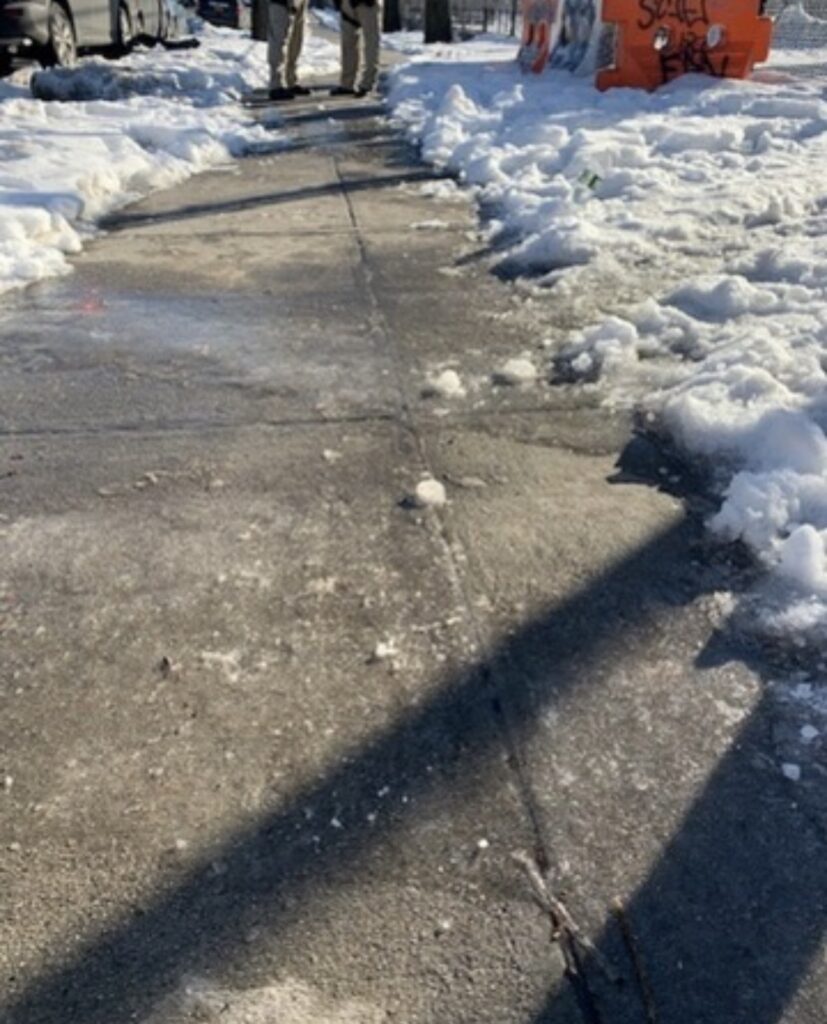
A bad fall can change your life: a broken wrist, a shattered hip or, God forbid, a serious head injury. But here is something many people do not realize. In New York, the simple fact that you fell and got hurt on someone else's property is not enough to win a case. You have to prove that the property owner knew or should have known about the danger, or that they created it. Here is what that really means, in plain English.
Property owners, and the businesses and managers who control a space, have a legal duty to keep it reasonably safe and to warn of hazards they know about. The key word is "reasonably." The law does not require a property to be perfectly safe, and it does not make an owner the automatic insurer of everyone who walks in. That makes sense. The real question is whether the owner acted reasonably under the circumstances.
In most slip-and-fall and trip-and-fall cases, the single most important question is notice. To hold an owner responsible for a dangerous condition, such as a wet floor, a broken step, ice on a walkway, torn carpeting or a raised sidewalk flag, you generally have to prove one of three things:
Not always, but usually, the defense will say, "We never knew about that," so actual notice can be hard to prove unless they admit it. Constructive notice is much harder for them to get around. The leading case is the Court of Appeals' decision in Gordon v. American Museum of Natural History, which holds that a defect must be visible and apparent and must exist for a sufficient length of time before the accident for the owner's employees to discover and fix it.
Technology has changed how we investigate notice. With Google Street View, for many locations you can go back year after year and see how long a condition has existed. The longer it was there, the bigger the problem for the owner. On the flip side, a puddle that appeared two minutes before you fell usually is not enough. A hazard that sat there for hours, or a defect that was there for weeks or months, is a very different story. That is why the timeline of the condition is often the whole case.
There is an important exception that a good lawyer looks for. If the owner knew about a recurring dangerous condition, such as a leak that drips in the same spot every time it rains or a mat that always bunches up in the same doorway, a jury can find notice of that ongoing hazard even without proof of the exact puddle on the exact day. Recognizing a recurring-condition case can turn a losing case into a winning one.
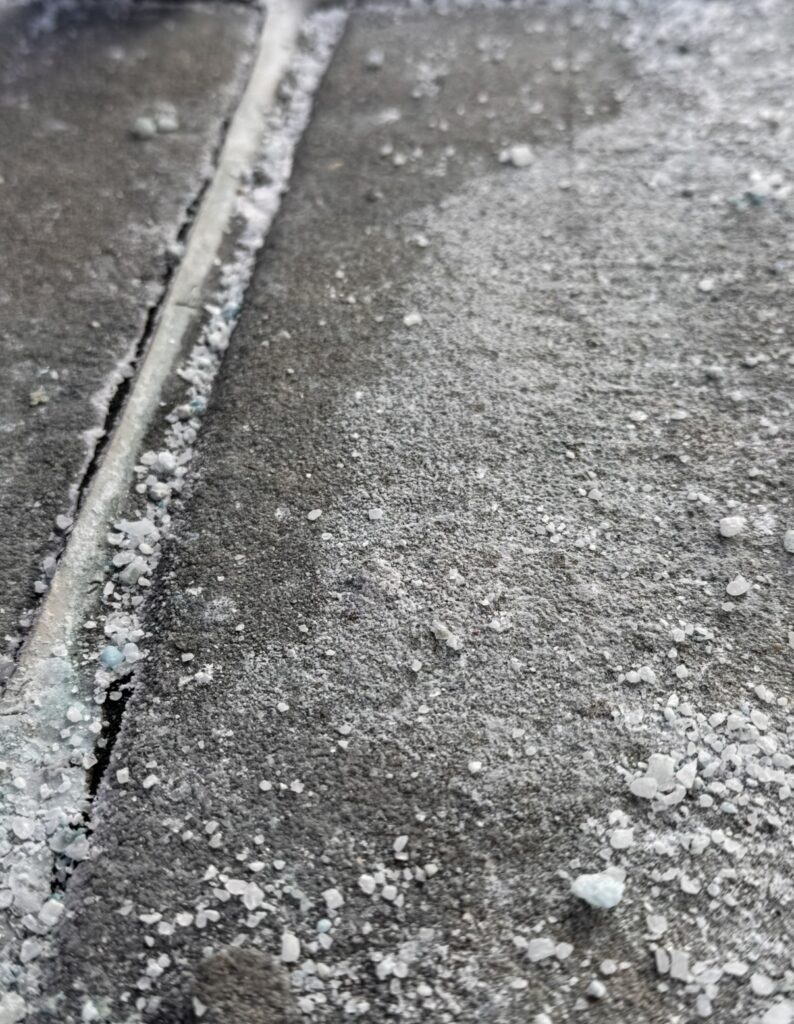
Snow and ice cases have their own wrinkle. Under the storm-in-progress rule, an owner generally gets a reasonable amount of time after a storm ends before they must clear snow and ice, so a fall during an active storm can be a hurdle. But it is not a free pass. As the Second Department's September 2026 decision in Batista v. Allerton Ave Estates, LLC shows, even when a storm was in progress, the owner can still face a trial if the slippery condition may have come from an earlier storm and the owner may have had notice of it.
Black ice is often a problem for injured people. Because it is so hard to see, courts frequently find it was not "visible and apparent" under Gordon, so the owner had no constructive notice of it. These cases turn on weather records and timing, which is exactly why they need careful, early work. Learn more about our snow and ice accident practice.
If you fell on a sidewalk in New York City, a specific law matters. Under Section 7-210 of the City's Administrative Code, the owner of the property next to the sidewalk, not the City, is usually responsible for keeping it reasonably safe, including clearing snow and ice and repairing defects, and is liable when a failure to do so causes injury. There is an important exception for one-, two- and three-family homes that are at least partly owner-occupied and used only as residences. For those properties, responsibility generally stays with the City. Figuring out who is actually responsible is often the first real battle in a sidewalk case, and getting it wrong can sink an otherwise strong claim.
Expect the owner and its insurer to argue two things: that the hazard was open and obvious, so you should have seen and avoided it, and that you were partly at fault because you were looking at your phone or wearing the wrong shoes. In New York, a hazard being open and obvious generally only removes the owner's duty to warn; the owner still has a duty to keep the property reasonably safe, and the issue mostly goes to your share of fault. New York also follows pure comparative negligence, which means being partly at fault reduces your recovery but does not erase it. Even if you were somewhat careless, you can still recover.
Evidence disappears fast. If you can:
The sooner a lawyer is involved, the sooner we can send preservation letters and get the maintenance, inspection and repair records before they are gone.
We have recovered significant compensation for New Yorkers hurt in slip, trip and fall cases, including:
See more of our results.
If you were hurt in a fall in New York, do not let an insurance adjuster convince you it was just your own clumsiness. Call MooreJustice Accident & Injury Lawyers for a free, confidential consultation, and we will look at who was actually responsible and what can be proven. Learn more about our slip and fall and premises liability practice.
Attorney Advertising. This article is for general informational purposes only and does not constitute legal advice, nor does it create an attorney-client relationship. Every case is different, and prior results do not guarantee a similar outcome. For advice about your specific situation, consult a licensed New York attorney.
Business Name: MooreJustice New York City Accident & Injury Lawyers
Business Address: 171 Madison Avenue, Suite 305, New York, NY, USA
Business Phone Number: +1 (917) 809-7014

Darren Moore is the founder of The Law Offices of Darren T. Moore, P.C. and a dedicated New York personal injury attorney. Known for his relentless advocacy and client-focused approach, he has spent his career helping injury victims pursue justice and recover the compensation they deserve. Darren handles a wide range of personal injury matters and is committed to delivering personalized representation for every client.


schedule a free consultation
"*" indicates required fields