Fact-Checked
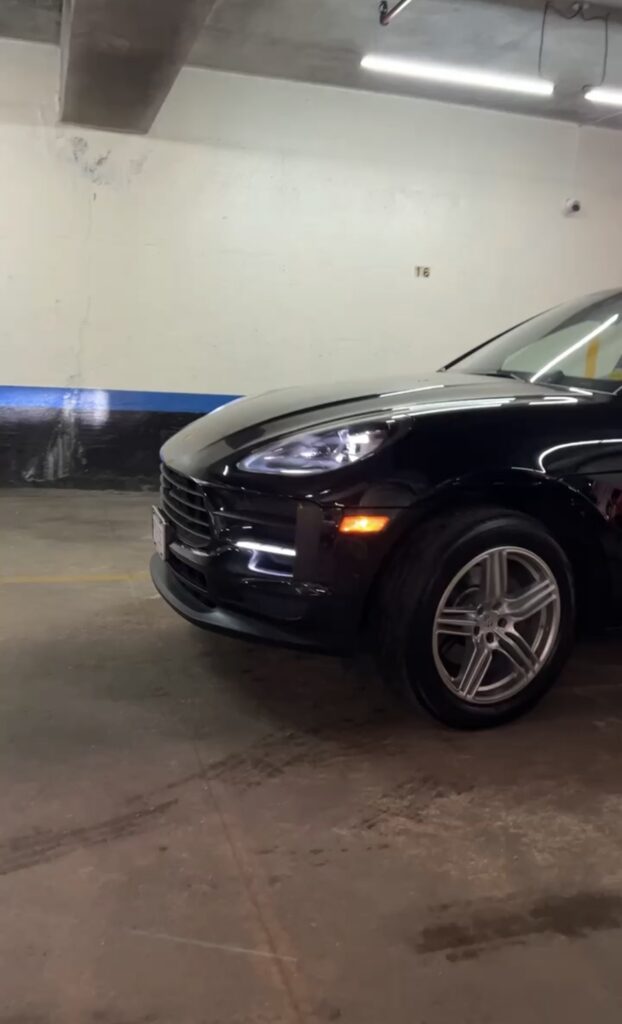
Rideshare apps have changed how New Yorkers get around. On any given day, hundreds of thousands of Uber and Lyft trips move through the five boroughs and the surrounding counties. But when one of those trips ends in a collision, the injured people left behind (passengers, pedestrians, cyclists and other drivers) quickly run into a hard question: who actually pays for the harm? The driver often carries only limited coverage. The real accountability, and often the real money, sits with the rideshare company. For years, companies like Uber have fought hard to keep it that way, arguing that their drivers are independent contractors the company cannot be blamed for.
From the outset, there are so many factors at play in a rideshare accident that you need a lawyer experienced in handling these claims. Where the ride began matters. Different insurance rules apply to trips that start outside New York City's five boroughs (Manhattan, the Bronx, Brooklyn, Queens and Staten Island), so if you were hurt in an Uber that picked you up in Nassau, Suffolk or Westchester, it is a different playing field.
Now back to whether Uber, Lyft and the other rideshare companies can be held responsible at all. A decision handed down by New York's Appellate Division, Second Department, on October 21, 2026, is the latest sign that Uber's favorite argument is not the sure thing it would like it to be.
Under a long-standing legal rule called respondeat superior, an employer is responsible for the wrongful acts its employees commit on the job. If an Uber driver is the company's employee, the company can be held liable for a crash that driver causes. But there is an important exception: a business generally is not responsible for the negligence of a true independent contractor it hires. That single distinction, employee versus independent contractor, is the battleground in nearly every New York rideshare injury case.
Uber's standard playbook is to point to the contract its drivers sign, label them independent contractors, and ask the court to dismiss the company from the lawsuit before a jury ever hears the facts. If you just sat and listened to their argument, you might almost be convinced: the driver decides when to work and for how long, wears no uniform, keeps no set schedule, and is their own boss. But are they really? That is the crux of the "control" argument.
In Rivera v. M. GS Talukder (Appellate Division, Second Department, No. 2025-03920, decided October 21, 2026), the plaintiff was injured when the vehicle she occupied collided with a car owned and driven by a man who, she alleged, was working for Uber at the time of the crash. After discovery, the Uber defendants (Uber Technologies, Inc., Uber USA, LLC and Rasier-NY, LLC) asked the trial court in Queens County to dismiss the case against them, arguing the driver was an independent contractor. The trial court agreed and dismissed the claims against the Uber defendants.
The Appellate Division reversed, ruling that the trial court should have denied Uber's motion and let the case go forward against the company. In plain terms, Uber does not get to walk away simply by waving the independent-contractor label.
The court laid out the framework that controls these cases: "Broadly speaking, an employee is someone who works for another subject to substantial control, not only over the results produced but also over the means used to produce the results." It identified the factors that matter in deciding whether a worker is really an employee, including whether the worker:
Just as important, the court stressed that a contract calling someone an independent contractor "is to be considered, but is not dispositive." The paperwork Uber relies on is not the final word. And the court underscored the point that matters most to injured New Yorkers: "Whether an actor is an independent contractor or an employee for the purposes of tort liability is usually a factual issue for the jury."
Because Uber failed to eliminate all triable issues of fact about whether the driver was acting as an independent contractor, the company was not entitled to be dismissed. The court reached that result "regardless of the sufficiency of the plaintiff's opposition papers," because a company asking for summary judgment must first carry its own burden of proof.
Rivera does not stand alone. New York's intermediate appellate courts are divided into Departments. The First Department covers Manhattan and the Bronx; the Second Department covers Brooklyn, Queens, Staten Island and the surrounding suburban counties. Together they decide the overwhelming majority of the state's rideshare injury appeals, and both are reading the law the same way: against Uber's attempts at an early exit.
In the Second Department, the court in Bandele v. Rasier-NY, LLC (July 2026) denied Uber summary judgment, holding that a driver's status is "usually a factual issue for the jury" and that Uber had not eliminated the triable issues about it. Rivera now follows the same path, and cites Bandele directly.
In the First Department, the court in Soares v. Rahmatulloev (January 2025) reversed a Bronx trial court that had dismissed the case against Uber. Uber pointed to app data showing the driver was offline about seven minutes before the crash. The appellate court held that was not enough to prove the driver was outside the scope of his work for Uber, where the driver testified that he was driving for Uber that day and had gone offline to take a break between fares.
These rulings do not conflict. The two Departments are applying the same control test and reaching the same result, and the Second Department cited the First Department's Soares decision in Bandele, which makes the trend unusually consistent across New York City and its suburbs.
The roots of this run deeper than the app era. In the Postmates case, Matter of Vega (2020), New York's highest court upheld a finding that a delivery platform exercised enough control over its couriers to make them employees for unemployment insurance purposes, an early signal that the gig-economy contractor label does not automatically hold up. And years earlier, in Rivera v. Fenix Car Service Corp. (2011), the Second Department held that a car service's detailed rules for its drivers could amount to enough control to make it liable, even though it called the drivers independent. The new Rivera decision cites both cases.
One important caveat remains. New York's Court of Appeals, the state's highest court, has not yet squarely decided whether an Uber or Lyft driver is an employee or an independent contractor for crash-liability purposes. Until it does, the answer turns on the specific facts of each case, including how the driver was recruited, paid, monitored, rated, disciplined and controlled through the app. That is exactly why these cases so often survive Uber's attempts at early dismissal and reach a jury. One issue just as important, but outside the scope of this article, is whether Uber or Lyft can force a case into arbitration under their terms and conditions. That is for another day and another blog.

If you were injured as a passenger, a pedestrian, a cyclist or another driver in a collision involving an Uber or Lyft vehicle, do not assume the company is off the hook just because its driver signed an app agreement. The law in New York is moving in the opposite direction. Rideshare cases also involve layers of insurance coverage that most people never see, including coverage that can change depending on whether the driver was simply logged into the app, waiting for a ride request or actively carrying a passenger. Sorting out who is responsible, and which policies apply, takes experience with how these companies operate and how New York courts are treating them.
At MooreJustice Accident & Injury Lawyers, we hold rideshare companies and their drivers accountable for the harm they cause on New York roads. If you or a loved one was injured in an Uber, Lyft or other rideshare crash, contact us for a free and confidential consultation. We will investigate the driver's relationship with the company, identify every available source of insurance coverage, and fight to recover the full compensation you deserve. Learn more about our car accident practice.
Attorney Advertising. This article is for general informational purposes only and does not constitute legal advice, nor does it create an attorney-client relationship. Every case is different, and prior results do not guarantee a similar outcome. For advice about your specific situation, consult a licensed New York attorney.
Business Name: MooreJustice New York City Accident & Injury Lawyers
Business Address: 171 Madison Avenue, Suite 305, New York, NY, USA
Business Phone Number: +1 (917) 809-7014

Darren Moore is the founder of The Law Offices of Darren T. Moore, P.C. and a dedicated New York personal injury attorney. Known for his relentless advocacy and client-focused approach, he has spent his career helping injury victims pursue justice and recover the compensation they deserve. Darren handles a wide range of personal injury matters and is committed to delivering personalized representation for every client.


schedule a free consultation
"*" indicates required fields